Interesting Shrimp for the Marine Aquarium
Chris Deer
|
Nearly every marine aquarist is aware of the more common shrimp species for the aquarium. Cleaner shrimp (Lysmata amboinensis), Coral Banded Shrimp (Stenopus hispidus) and Peppermint Shrimp (Lysmata wurdemani) are all beautiful and hardy crustaceans but there are a few less-known shrimp that deserve attention.
|
| Pistol Shrimp (Alpheus sp.) � |
| Pistol shrimp are one of the symbiotic shrimp available in our hobby. Symbiosis refers to the organisms living together to benefit one another. Pistol shrimp are practically blind crustaceans. They take up residence with what are referred to as Shrimp Gobies (Yellow Watchman Gobies, Candy Cane Gobies, Wheeleri Gobies, etc). The pistol shrimp digs out a burrow often lining it with tiny rocks and pebbles to stabilize the |
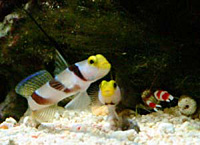
Candy Pistol Shrimp (A. RANDALLI), with a
pair of Candy Cane Gobies |
home it has made. The goby or pair of gobies lives within the burrow often staking out the opening of the burrow. If a predator or invader comes too near, the goby will rapidly swipe its tail in the antennae of the pistol shrimp. This alerts the pistol shrimp of trouble causing the shrimp to loudly pop its large claw to deter the invader. The couple or group lives together to help one another. This behavior is called a symbiotic relationship or symbiosis.
|
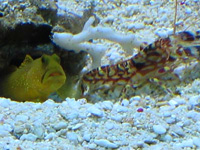
Tiger Pistol Shrimp (A. bellulus) with a Yellow Watchman Goby |
The sound a pistol shrimp makes when popping its claw can be heard all over the house! Pistols make good scavengers with their extreme sense of smell and they offer another bonus by digging in the substrate keeping it clean around their burrows. These shrimp are completely safe in the aquarium.
Avoid placing a pistol shrimp in an aquarium that contains predators like pufferfish, eels, large wrasses,
|
lionfish and triggers (to name a few). Instead, keep them dwarf angelfish, tangs, gobies, blennies, rabbitfish and other nonpredatory species. This is not a shrimp you will see every day but they are regularly moving sand or gravel in and out of their burrows offering you enough of a glimpse to find them quite enjoyable. Be aware that you will know it is there every
|
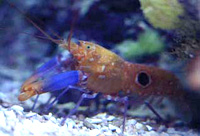
Rare Michael's Pistol Shrimp (A. soror) |
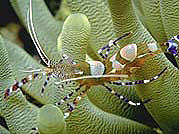 Anemone Shrimp (Periclimenes sp.) � Anemone Shrimp (Periclimenes sp.) �
P. brevicaparlis in anemone tentacles |
day when it sounds its loud popping claw in your aquarium.
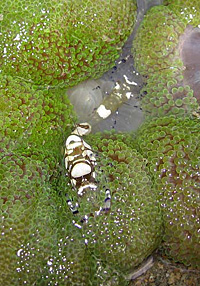
Anemone shrimp (sometimes called Glass Shrimp) are found within the tentacles or base of sea anemones, mushroom polyps and even LPS corals. Most reach only about 1� in size, finding safety within the anemone. Like clownfish, they cover themselves with mucus from the anemone
|
| allowing them safety there. These shrimp are considered to be commensal organisms meaning they benefit from their host yet offer the host no benefit (like the 40 year old guy still living at home with his parents with no job or direction! ). The anemone shrimp receives protection from predators and consumes excretions from the host while the anemone receives |
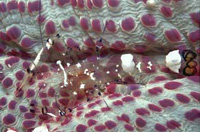
Anemone Shrimp disguised under anemone |
 Harlequin Shrimp (Hymenocera sp.) Harlequin Shrimp (Hymenocera sp.)
|
no known benefit from the shrimp. This is the perfect shrimp for nano aquariums due to their small size. Instead of an anemone, you may want to offer the shrimp a coralimorph mushroom polyp for a host. We have also had these shrimp take up house within the tentacles of Euphylia corals (Hammers, Frogspawns, Torch, etc). We suggest offering the anemone shrimp tiny food particles to keep them healthy in the aquarium.
If kept in pairs, these tiny shrimp will spawn regularly releasing the larvae into the water column offering natural live plankton to your live corals. Because of their tiny size, avoid housing them with larger fish that may make a meal of them!
|
| Harlequin shrimp are some of the most unusual of all of the ornamental marine shrimp. The ornate markings, vivid coloration and odd shaped claws make them desirable to many hobbyists but there is a catch to keeping these striking shrimp. They only eat the legs and suction cup feet of starfish! Do not be alarmed, everything has to eat something! |
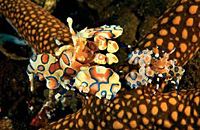 Harlequin Shrimp (Hymenocera sp.) Harlequin Shrimp (Hymenocera sp.) |
Consuming about one medium starfish per month, these beautiful specialized feeders are peaceful with all other invertebrates. Inexpensive starfish like Chocolate Chip Stars and Common Atlantic Starfish make good choices for keeping Harlequin Shrimp healthy. The flat claws are used to pry up the starfish�s leg to reveal the shrimps favorite food, the suction cup feet.
|
|