|
|
News & Reviews Article
| Title |
Winterizing Your Pond |
| Author |
Ralph Cabage
|
| Last Updated |
2011-05-28
|
| Abstract |
|
|
|
Winterizing Your Pond
|
 |
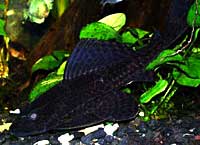
As autumn approaches, pond water temperatures begin to drop into the lower 70�s. Smaller ponds have likely dropped into the upper 60�s! Fall is the time to get your pond ready for the coming colder winter months. First, if you have a Plecostomus (the algae eating fish) in your pond you need to catch it and trade it in or put it into your aquarium. Once the water temperature gets below 74 degrees, these fish begin to suffer. Plecostomus do not survive winter. If you trade it in purchase another one |
when the pond water warms back up in the spring.
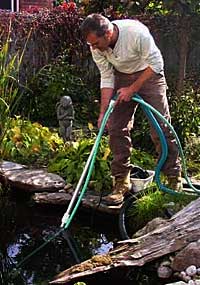
Give your pond a head start by performing a 25%-35% partial water change. Remove debris from the bottom of the pond while the water is low. Refill your pond will treated tap water or well water. Be sure to buffer up your carbonate hardness (KH or
|
 |
 |
alkalinity) to stabilize the pH. Clean the biological filter media (bioballs, bio-ribbon, shredded pvc, etc.,) with some of the old pond water, well water or treated tap water (never with chlorinated water). This removes trapped muck within the media and allows better water flow and oxygen enriched water to reach the beneficial bacteria that are established on the media. This also |
improves the health of your biological filter when the water warms back up in the spring and your fish become more active.
In the coming weeks, leaves will begin to fall from the trees. Either cover your pond with a pond net or remove fallen leaves with a dip net every couple of days before they begin to decay in your pond.
Decaying leaves turn your pond water dark brown and cause major algae outbreaks in the spring! Decaying material can also cause a pH crash severe enough to kill your fish. Pond nets are inexpensive compared to the cost of your pond and its fish. If you do not think you will be able to keep the leaves dipped out, cover your pond now. If your pond water is already dark or brown in color, add a bag of activated carbon to the filter.
Within a couple of days, the pond water will once again be clear. In the coming weeks you will want to switch your pond food to a wheat germ based food. This food is processed quickly by the fish reducing the chances of the fish developing bloat. As water temperatures cool, your fish metabolism begins to slow and foods move through the digestive systems more slowly. from food not being processed quickly enough by the digestive system of fish will slowed metabolism caused by the cooler water. Once the water temperature drops below 55 degrees, we suggest not feeding the fish at all. On warm days the pond water temperature may rise above 55 degrees. Feeding them wheat germ based foods is safe during these warmer days if the fish are active. Do not worry, your fish will not starve to death if you �beef� them up now with a wheat germ food. The best wheat germ food is available now from AquaLife.
|
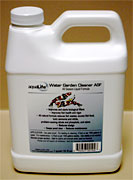
| Last, begin using one of the biological additives designed for reducing the organic material in your pond. These products have bacteria that thrive on organics thus cleaning your pond and improving the water conditions. By adding these products at least once per month, you will have less algae problems, more stable water conditions and clearer pond water. Remember that even though your fish are dormant once the water gets cold, they still need proper |
 |
| water quality to keep them strong. A little extra work now will make your pond and your pond fish healthier in winter and when they come out of dormancy in the spring. |
|

|
|
|
|