Venomous Aquarium Animals
Chris Deer
|
 |
First, let�s clear up the confusion over an animal being poisonous compared to being venomous. Poisonous refers to being toxic by either eating or coming in contact with the organism. Take pufferfish for an example. Pufferfish contain a toxin called Tetrodotoxin. If consumed even in small quantities, it can result in death. The toxin is a |
| poison. Venomous creatures cause harm from either a sting or puncture or from being bitten by the organism. Venom is injected into the unfortunate victim via this bite or puncture. |
| There are some common animals we keep in our aquariums that should be handled with care to protect the owner from being harmed. Check out these animals that you should use caution with when either handling them or when working in your aquarium. Please note that a sting from one of these |
 |
animals can be extremely painful but is rarely fatal. If you have allergic reactions to bee stings, etc, you may have a more severe reaction to one of these stings compared with other people.
Always seek medical attention if you experience shortness of breath, hives, swelling of the tongue or throat or severe swelling of the injection area. Most of the venoms used by these animals are best treated by soaking the injection site in as hot of water as you can tolerate without being burned. The hot water supposedly breaks down the venom helping to prevent it from spreading further into the body. For some people, it is just easiest to go to the emergency room and get a shot of pain medicine to give relief. The pain can be excruciating depending on the amount of venom the animal was able to inject. |
 |
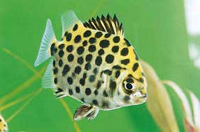
All Scatophagus species have venomous spines in their dorsal, anal and pelvic fins. Scats can survive in fresh, brackish and saltwater environments. The spines are used solely for protection. If a predator approaches, the fish will merely tilt forward with its venomous spines erected. The pain from this fish is quite extreme.
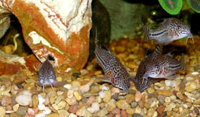
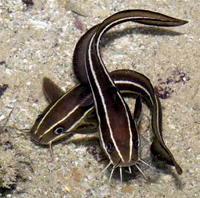
Nearly every catfish available in our hobby have venomous pectoral spines (excluding plecostomus species). Even a small stick from one of these spines can cause fairly |
| intense pain and continuous throbbing of the injection site for an hour or more. Pictured above is the marine catfish, the Coral Catfish. A sting from one of these guys is said to be extremely painful. Do not mistake this fish for your completely non-venomous juvenile engineer goby. Supposedly, the juvenile engineer goby mimics the coral catfish for protection from predators aware of the sting from these marine catfish. |
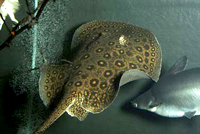
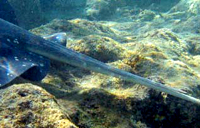
Both freshwater and marine stingrays all possess a venomous spine located near the end of the tail. Though these are used mainly for protection, in the aquarium your ray could become nervous with you working closely overhead. The stingray can quickly lunge its tail upward leading to the owner being punctured by the tail spine. The sting from one of these animals is said to be of the extreme. Always use caution around these animals even if your stingray becomes tame.
|
 |
 |
| Likely the most painful sting of all aquarium fish can be from a lionfish. Lionfish belong to the family Scorpaenidae, all of which possess venomous spines. Though lionfish stings rarely require hospitalization, other members of the scorpionfish family can result even in death! These animals do not swim about trying to sting their tankmates or owners but they will protect themselves if they feel threatened. A spooked scorpionfish may accidentally dart forward causing the owner or a tankmate to be stung so always use care when working in your aquarium around any member of this family. Here is |
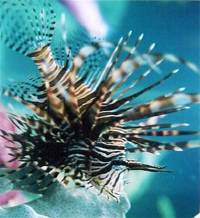 |
a list of some of the more common members of scorpionfish found in the aquarium trade: Volitan lionfish, Dwarf Lionfish, Antennata Lionfish, Fuzzy Dwarf Lionfish, Radiata Lionfish, Sailfin Scorpionfish, Rhinopias species, Marine Leaffish, Toadfish (family Ba trachoididae).
|
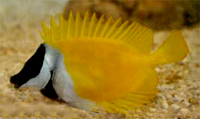 |
Another popular group of aquarium fish that contain venomous spines is the Rabbitfish. There are many species of rabbitfish sold for the aquarium and they all contain venomous dorsal spines and anal spines. All rabbitfish are nervous fish that can sometimes dart about the aquarium erratically when spooked by a hand reaching into |
the aquarium. This is the most common time when the aquarist is stung as the fish accidentally slams head forward into the owners hand or arm.
Though these stings are rarely serious, it will result in the owner having a new respect for this fish when he/she cleans the tank next time! Though �Dori� never nailed �Nemo�, she very well could have if |
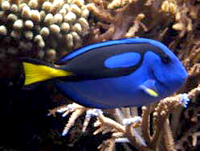 |
he'd annoyed her! Blue regal tangs can inject venom via their sharp tail spine. This fish uses this as a defense mechanism only. Hobbyists are only stung when being careless around this fish.
Use caution when working around any venomous animal. Though they become tame with time, carelessness can cause you great pain and a possible expensive doctor visit!! |
|