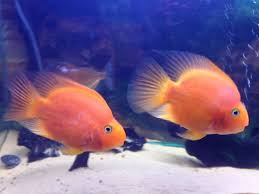
The Blood Parrot Cichlid (Amphilophus citrinellus x Paraneetroplus synspilushas) been a welcome change to the aquarium hobby since around 1986. Breeders in Taiwan are thought to have crossed the Midas cichlid (Amphilophus Citrinellus) and the Redhead cichlid (Paratheraps Synspilum) to get the iconic shape of the parrot cichlid, though there is some debate as to other crosses that are available.
Basic Info:
Important note- Due to the various breeding strategies, there are now several colorations available such as "blood", "purple", "green", "King Kong", "brown", and "black".
Max size: 6- 9"
Preferred water parameters: 72-78 degrees F, pH 6.4- 8.5
Compatibility: These fish are a colorful addition to a larger aquarium that are usually a bit shy and skittish when they are younger. As they grow, it is important to allow them space to grow to reach their max size of 9". Tank mates need to be peaceful because the blood parrot has a deformed mouth that renders them useless in a fight (which should be avoided amongst fish anyway). These fish can become very excited at feeding time and it is important to make sure their tank mates are able to get enough food.
Breeding: Males are generally sterile which leads to most parrots coming from the cross between the Midas and Redhead cichlids. Females can generally cross with other similar species of cichlid such as flower horns and other Central American cichlids.
Additional Product recommendations:
For younger fish, for better color- (AZ228) 9 in 1 Color Enhancing Pellets
For larger, older fish- (HA203) Fluval Bug Bites Cichlid Pellets M-L 3.5 oz
For better filtration (canister)- (SIC428W) Whale 3 Canister Filter
For better filtration (hang-on)- (SIC101) Tidal 75 Aquarium Power Filter